Communication is one of the most important skills in everyday life. Whether you are talking with friends, family members, teachers, colleagues, or customers, good communication helps you express your thoughts clearly and understand other people better.
In today’s world, communication skills are important for students, professionals, business owners, and anyone who wants to improve their personal and professional life.
Many people think communication means speaking good English, but this is not completely true. Good communication is about sharing your ideas clearly, listening carefully, understanding others, and responding respectfully.
In this article, we will explore 10 practical ways to improve your communication skills in 2026.
1. Improve Your Listening Skills
Listening is one of the most important parts of communication. Good communication is not only about speaking; it is also about understanding what another person is saying.
Many people focus only on what they want to say next instead of listening carefully.
How to Improve Listening Skills:
- Pay attention when someone is speaking.
- Avoid interrupting others.
- Maintain natural eye contact.
- Ask questions if something is unclear.
- Try to understand the speaker’s point of view.
Example: If your friend is explaining a problem, listen carefully before giving advice. This makes the conversation more meaningful.
2. Speak Clearly and Confidently
Speaking clearly helps people understand your message without confusion. You do not need to use difficult words or speak very fast to sound confident.
Focus on expressing your thoughts in simple language.
Tips to Speak Clearly:
- Speak at a comfortable speed.
- Pronounce words properly.
- Avoid speaking too quickly.
- Use simple and understandable sentences.
- Take a short pause when needed.
Example: Instead of using complicated sentences, explain your ideas in short and clear words.
3. Improve Your Body Language
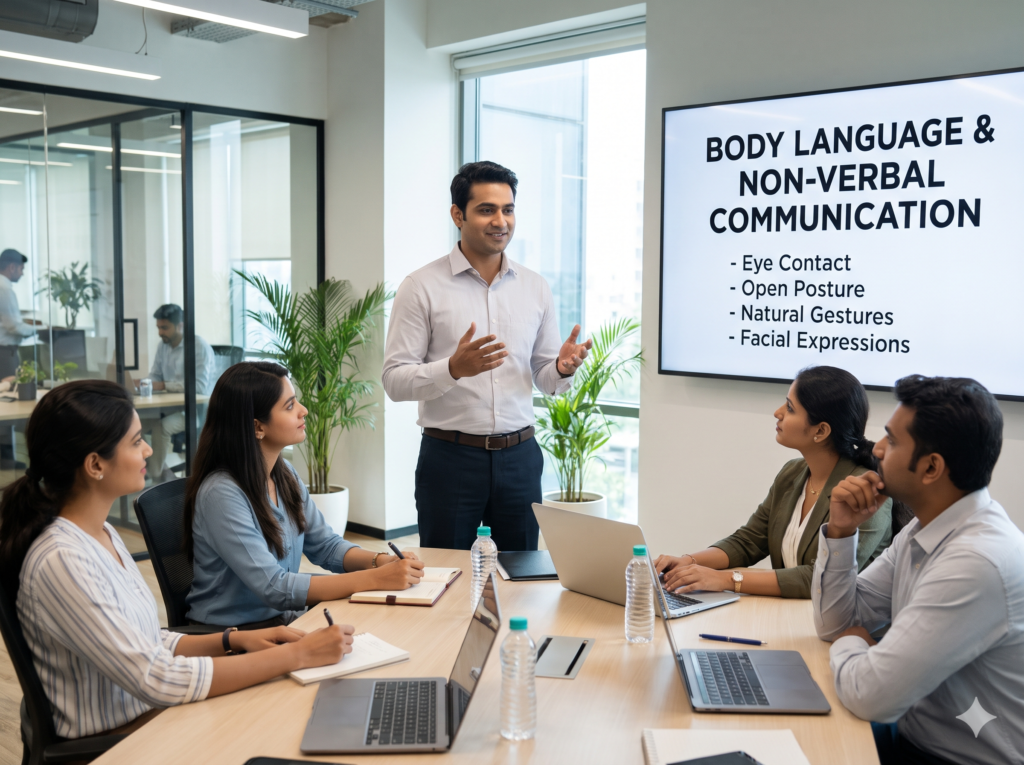
Body language plays an important role in face-to-face communication. Your facial expressions, posture, gestures, and eye contact can support the message you are communicating.
Ways to Improve Body Language:
- Maintain comfortable eye contact.
- Keep a relaxed posture.
- Use natural hand gestures.
- Show interest through facial expressions.
- Avoid looking distracted during conversations.
Remember that body language should feel natural, not forced.
4. Build Your Vocabulary
Having a good vocabulary helps you express your thoughts more accurately. You do not need to memorize thousands of difficult words. Learning useful everyday words is a better starting point.
How to Improve Vocabulary:
- Read books, newspapers, and blogs.
- Learn 3–5 new words every day.
- Understand how words are used in sentences.
- Practice using new words in conversations.
- Keep a small vocabulary notebook.
Example: Learn one useful word each day and try to use it in a sentence.
5. Practice Speaking Every Day
Regular practice is one of the best ways to become a better communicator. The more you practice expressing your thoughts, the more comfortable you may become.
Daily Speaking Practice:
- Talk with friends and family.
- Explain your daily activities in English.
- Read a paragraph aloud.
- Record yourself speaking and review it.
- Practice introducing yourself.
Even 10–15 minutes of regular practice can help you develop confidence over time.
6. Learn to Control Your Emotions
Emotions can influence how we communicate. When someone is angry, frustrated, or upset, it can become difficult to explain thoughts calmly.
Learning to manage emotions can help you communicate more respectfully.
Tips for Better Emotional Communication:
- Think before responding.
- Avoid using hurtful words.
- Take a short pause when upset.
- Explain your feelings calmly.
- Respect different opinions.
Example: Instead of saying, “You never understand me,” try saying, “I feel that my point is not being understood. Can we discuss it?”
7. Ask Better Questions
Asking questions makes conversations more interesting and helps you understand other people.
Good questions show that you are interested in the discussion.
Types of Questions to Ask:
- What do you think about this?
- Can you explain that again?
- Why do you prefer this option?
- What was your experience?
- How can we improve this?
Try asking open-ended questions that encourage people to explain their thoughts.
8. Improve Your Reading and Writing Skills
Reading and writing also help improve communication. Reading introduces you to new ideas and vocabulary, while writing helps you organize your thoughts.
Ways to Improve:
- Read articles and books regularly.
- Write a short paragraph every day.
- Practice writing emails and messages.
- Learn basic grammar and sentence structure.
- Read your writing again to identify mistakes.
You can also maintain a daily journal to practice expressing your thoughts.
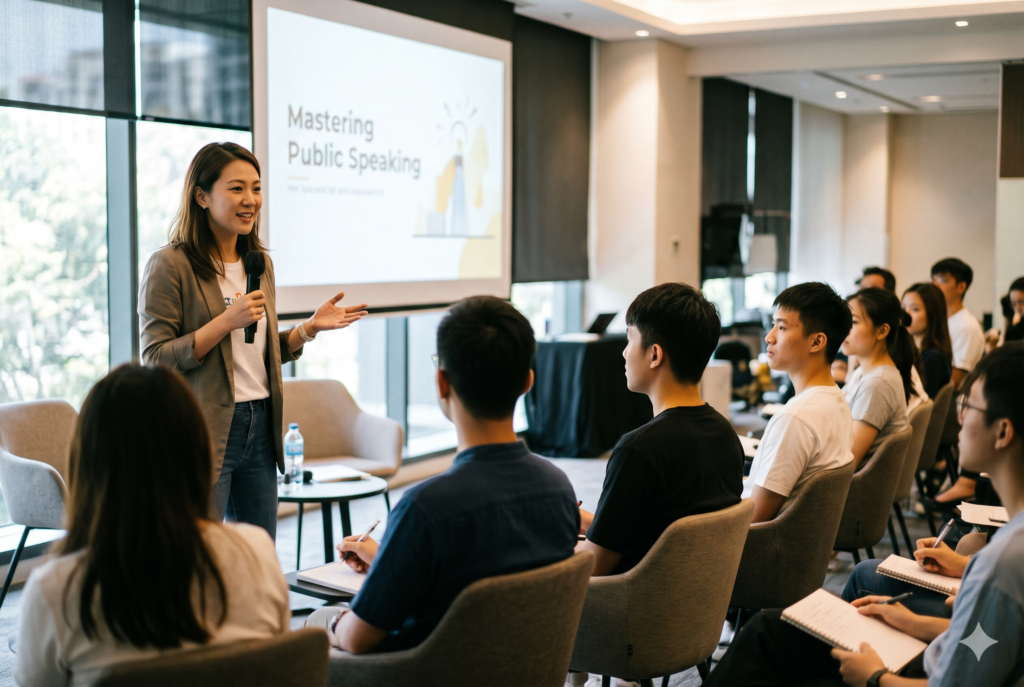
9. Develop Your Public Speaking Skills
Public speaking is useful in school, college, business, meetings, and professional life.
Some people feel nervous when speaking in front of a group. Starting with small speaking activities can make the experience more comfortable.
How to Improve Public Speaking:
- Prepare your topic before speaking.
- Organize your ideas into simple points.
- Practice in front of a mirror.
- Start by speaking in small groups.
- Use examples to explain your ideas.
- Speak at a natural pace.
Tip: Do not try to memorize every sentence. Understand your topic and explain it naturally.
10. Be Respectful and Open-Minded
Good communication requires respect. People may have different opinions, experiences, and ways of thinking.
Respecting these differences helps create better conversations.
How to Communicate Respectfully:
- Allow others to finish speaking.
- Avoid judging people too quickly.
- Respect different opinions.
- Use polite language.
- Accept feedback positively.
- Apologize when you make a mistake.
Remember, being a good communicator also means making other people feel heard and respected.
Daily Communication Skills Practice Plan
You can follow this simple 7-day practice plan to begin improving your communication skills.
| Day | Practice Activity |
|---|---|
| Day 1 | Read aloud for 10 minutes |
| Day 2 | Learn 5 new vocabulary words |
| Day 3 | Practice speaking in front of a mirror |
| Day 4 | Have a meaningful conversation |
| Day 5 | Record a 2-minute speech |
| Day 6 | Practice active listening |
| Day 7 | Give a short speech on your favourite topic |
Repeat these activities and gradually increase the difficulty as you become more comfortable.
Common Communication Mistakes to Avoid
Here are some common mistakes that can make communication less effective:
- Interrupting someone while they are speaking.
- Speaking too quickly.
- Not listening carefully.
- Using unclear or confusing sentences.
- Avoiding questions when something is unclear.
- Ignoring other people’s opinions.
- Using an unnecessarily aggressive tone.
- Being distracted during conversations.
Avoiding these habits can help you become a more effective communicator.
Benefits of Good Communication Skills
Improving communication skills can provide many benefits in everyday life.
- Better relationships: Helps you understand friends, family, and other people.
- More confidence: Makes it easier to express your thoughts.
- Career development: Supports teamwork, interviews, and professional discussions.
- Better problem-solving: Helps people share ideas and find solutions.
- Improved learning: Makes it easier to ask questions and understand information.
- Leadership development: Helps you explain ideas and guide group discussions.