
Today, many people in India are interested in the share market. Some people invest money for the long term, while others buy and sell shares to earn profits through trading.
If you are a beginner and want to start share market trading in India, you should first understand how the stock market works, how to open a Demat account, how to choose stocks, and how to manage risks.
In this article, we will explain everything step by step in simple language so that beginners can understand share market trading easily.
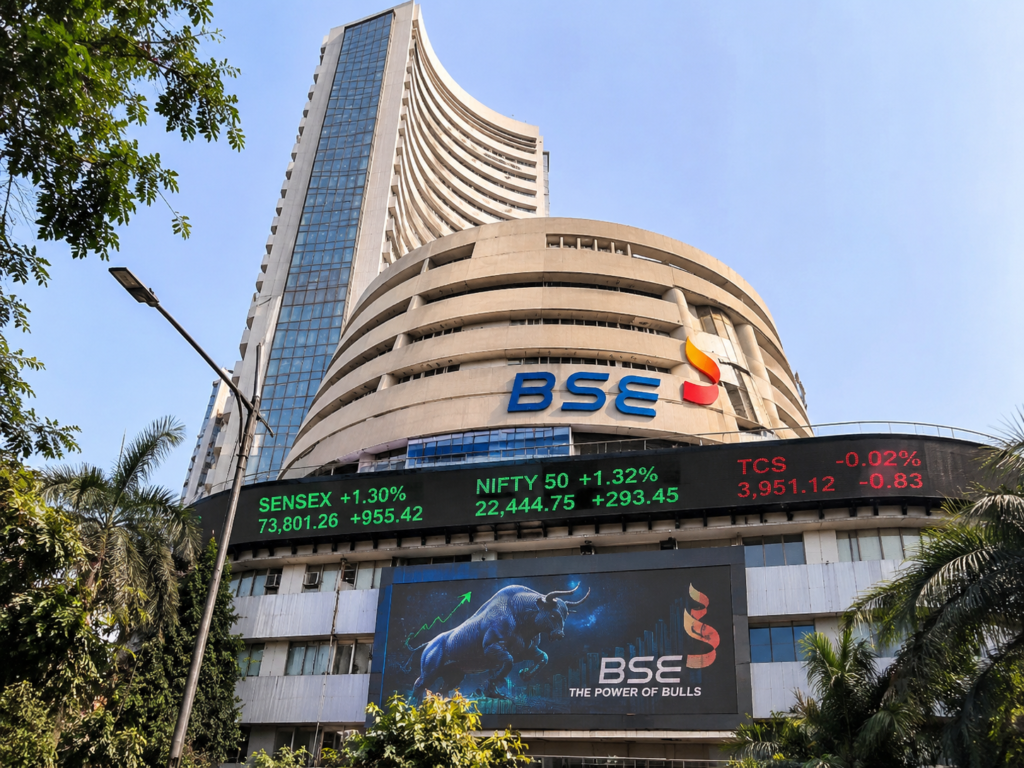
1. What Is the Share Market?
The share market is a place where people buy and sell shares of different companies.
A share represents a small ownership part of a company. When you purchase a company’s shares, you become a shareholder of that company.
For example, if you buy shares of a company like Reliance Industries, you become a small owner of that company.
The share market helps companies raise money and gives investors an opportunity to participate in their growth.
In India, the two major stock exchanges are:
- NSE (National Stock Exchange)
- BSE (Bombay Stock Exchange)
Both exchanges provide a platform for buying and selling shares.
2. How Does the Stock Market Work?
The stock market works through buyers and sellers.
When someone wants to buy a share, another person may be willing to sell it. The stock exchange helps match these orders.
Share prices change because of different factors, such as:
- Company performance
- Demand and supply
- Economic conditions
- Government policies
- Company news
- Market trends
For example, if a company performs well and more people want to buy its shares, its share price may increase. However, prices can also fall due to negative news or poor performance.
3. Difference Between Trading and Investing
Many beginners think trading and investing are the same, but they are different.
Trading:
Trading means buying and selling shares over a short period. Traders generally try to benefit from price movements.
Investing:
Investing means purchasing shares and holding them for a longer period to participate in a company’s growth.
The main difference is the time period and the strategy used.
4. What Is a Demat Account?
A Demat account is an account used to hold shares and other securities in electronic form.
When you purchase shares in India, they are generally stored electronically in your Demat account.
To start trading, you generally need:
- A Demat account
- A Trading account
- A bank account
You can open these accounts through a registered stockbroker.
5. Documents Required to Open a Demat Account
Before opening a Demat account, you generally need these documents:
- PAN Card
- Aadhaar Card or another accepted identity document
- Bank account details
- Mobile number
- Email address
- Photograph or video verification, if required
The broker may ask for additional information depending on its account-opening process.
6. How to Open a Demat Account in India
Follow these basic steps:
Step 1: Choose a Registered Broker
Select a stockbroker registered with SEBI and check its charges, services and security features.
Step 2: Visit the Official Website or App
Visit the broker’s official platform and select the account-opening option.
Step 3: Enter Your Details
Provide the required personal information and PAN details.
Step 4: Complete KYC
Complete the identity verification process and submit the required documents.
Step 5: Complete Verification
Follow the broker’s verification instructions, which may include video verification.
Step 6: Account Activation
After successful verification, your account may be activated.
Always check the latest account-opening rules and charges before proceeding.
7. Different Types of Trading in the Stock Market
There are different types of trading. Beginners should understand them before making any decision.
A. Intraday Trading
Intraday trading means buying and selling shares on the same trading day.
For example, a trader buys a share in the morning and sells it before the market closes.
Intraday trading can be risky because prices may change quickly.
B. Swing Trading
Swing trading involves holding shares for a few days or weeks to benefit from price movements.
Traders generally study price charts and market trends before making decisions.
C. Positional Trading
Positional trading involves holding a position for a longer period, such as several weeks or months.
D. Futures and Options (F&O)
Futures and Options are financial contracts whose value depends on an underlying asset.
They are complex financial instruments and can involve significant losses. Beginners should understand their risks before considering them.
8. What Is NSE and BSE?
India has two major stock exchanges.
NSE (National Stock Exchange):
NSE is one of India’s major stock exchanges. Its popular index is Nifty 50.
BSE (Bombay Stock Exchange):
BSE is one of India’s oldest stock exchanges. Its popular index is Sensex.
Both exchanges provide electronic platforms for trading in securities.

9. How to Learn Stock Market Trading?
Before putting real money into the market, learn the basic concepts.
Here are some important things to study:
- Stock market basics
- Candlestick charts
- Support and resistance
- Trading volume
- Market trends
- Risk management
- Fundamental analysis
- Technical analysis
You can also use a virtual trading or paper trading platform to practise without risking real money.
10. What Is Technical Analysis?
Technical analysis is a method of studying price charts and market data to understand possible price movements.
Some common technical analysis tools include:
- Moving Average
- RSI (Relative Strength Index)
- MACD
- Support and Resistance
- Candlestick Patterns
These tools do not guarantee future prices or profits. They are only used to study market behaviour.
11. What Is Fundamental Analysis?
Fundamental analysis means studying a company’s financial condition and business performance.
Before researching a company, you can check:
- Revenue
- Profit and loss
- Company debt
- Management
- Business model
- Future growth opportunities
It helps investors understand the financial health of a company.
12. Important Risk Management Tips for Beginners
Risk management is one of the most important parts of trading.
Follow these basic safety rules:
- Never use borrowed money for trading.
- Do not invest money needed for essential expenses.
- Understand the risks before buying any stock.
- Avoid making decisions based on social media tips.
- Never assume that profits are guaranteed.
- Learn how stop-loss orders work.
- Avoid excessive trading.
- Maintain a record of your decisions.
- Be careful with leverage and margin trading.
- Take time to learn before making financial decisions.
Remember, even experienced traders can lose money.
13. Common Mistakes Made by Beginners
Many new traders make mistakes because they start without proper knowledge.
Some common mistakes include:
- Trading without learning the basics
- Following random stock market tips
- Expecting quick profits
- Taking unnecessary risks
- Ignoring brokerage and other charges
- Trading with borrowed money
- Making emotional decisions
- Investing without understanding a company
Avoiding these mistakes can help you develop better financial habits.
14. Best Resources to Learn Share Market Trading
If you want to learn about the Indian stock market, these educational resources can help:
- SEBI: Official information about securities markets and investor protection.
- NSE India: Learn about stock exchanges and market products.
- BSE India: Explore market information and educational resources.
- Zerodha Varsity: Free educational material about investing and trading.
Always prefer reliable and official educational sources.
15. Is Share Market Trading Good for Beginners?
The share market can be an interesting way to learn about businesses and financial markets. However, trading is not a guaranteed way to earn money.
Beginners should first understand how the market works, learn about different trading methods, and practise with virtual trading.
It is important to remember that protecting your money is more important than chasing quick profits.